


I need to purchase industrial computers, is it reliable to find Chinese manufacturers?
2026-03-14
Choosing a Chinese industrial computer manufacturer is a reliable option. China boasts numerous professional industrial computer brands that have achieved high levels of product reliability, environmental adaptability, industry certifications, and service systems.
Technological Strength: China boasts a complete industrial chain, from chip design and PCB manufacturing to complete system assembly. Chinese manufacturers such as Advantech and IPCtech have over 15 years of R&D experience, supporting processors from multiple platforms including Intel, AMD, Phytium, and Loongson. Their products have obtained international certifications such as CE, FCC, and IEC. Strict cost control allows them to offer customers highly competitive prices while maintaining reliable quality.
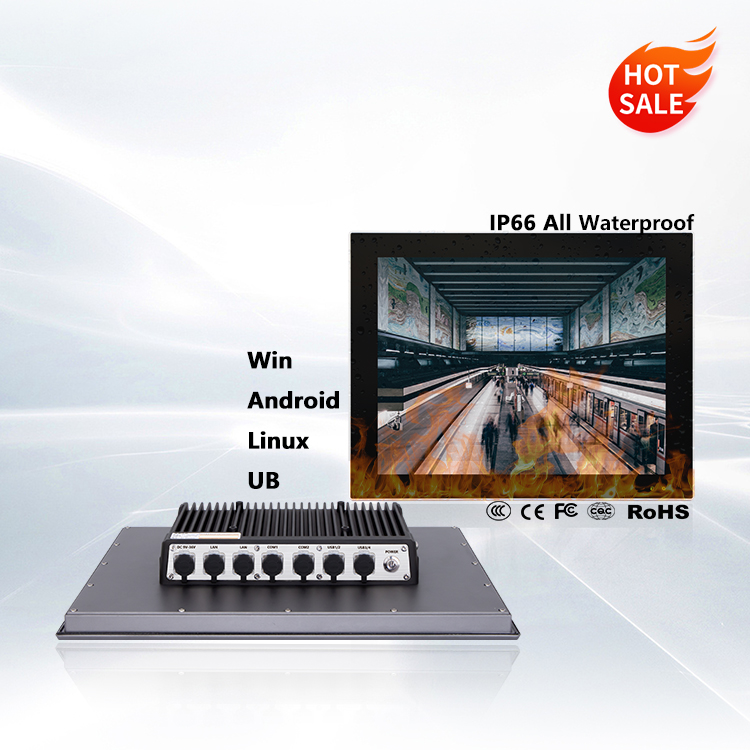
Environmental adaptability: After decades of technological accumulation, products from leading Chinese industrial computer brands have reached international advanced levels in terms of wide-temperature operation (-40℃~85℃), shock resistance, and long-term stability. They possess IP65/67/68 protection ratings, are vibration-resistant, dustproof, and waterproof, making them suitable for harsh industrial environments.
Wide range of industry applications: Products manufactured by Chinese companies have stringent industry certifications and have been successfully applied in key areas such as rail transportation, energy, and military industries.
Strong Customization Capabilities: Chinese manufacturers have a large domestic user base and a comprehensive after-sales service system, understanding the specific needs of various industries (such as specific interfaces, sizes, and software compatibility). They typically have flexible R&D teams that support in-depth OEM/ODM customization. They excel at providing in-depth customization services, responding quickly to everything from special interfaces and sizes to specific industry protocol adaptations. The cycle from requirement matching to sample provision is much shorter than that of international brands, and their service response speed is extremely fast.
Procurement cost advantage: The prices of industrial computers in China are generally 35% to 50% lower than those of European and American brands such as Siemens and Beckhoff. China has a complete industrial chain and mass-produced industrial supply, which enables cost reduction.
Choosing Chinese industrial PC products means you'll gain a solution with significant advantages in initial procurement costs, long-term operating expenses, supply chain responsiveness, and future technological adaptability. This is not just about cost control, but a strategic choice to improve overall operational efficiency and return on investment.
When procuring industrial computers, it's not enough to just consider price and country of origin. The core focus should be ensuring the product perfectly matches your specific application scenario, existing system architecture, and long-term maintenance needs.
Application Scenario: Is it for machine vision, motion control, data acquisition, edge computing, or as an HMI (Human-Machine Interface)?
Environmental Conditions: Is the installation environment a standard control cabinet, a high-temperature workshop, outdoors (requiring waterproof and dustproof protection), a mobile vehicle (vibration resistant), or a high-voltage environment with electromagnetic interference?
Performance Requirements: How much computing power (CPU/GPU), memory, and storage are required? Are there stringent real-time requirements (e.g., a real-time operating system)?
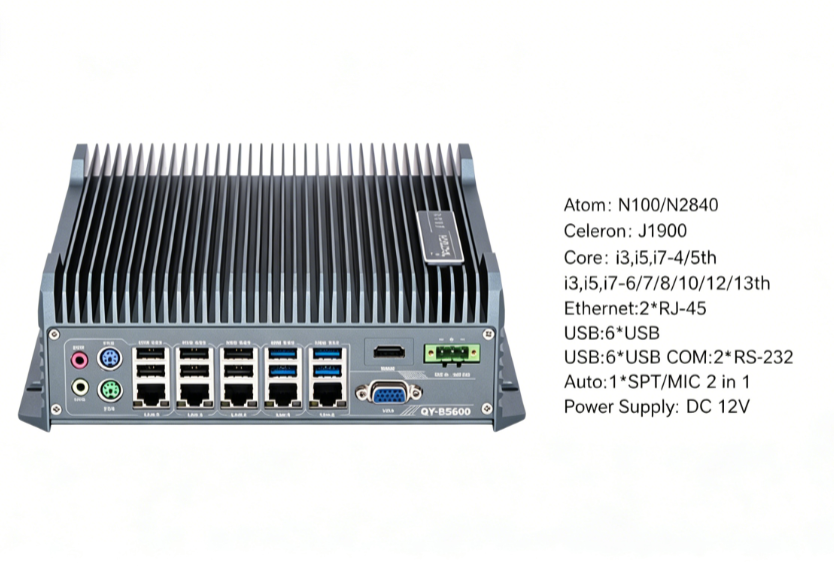
Processor and Platform: Choose an Intel Core/Celeron, AMD Ryzen, or ARM platform based on computing power requirements. Pay attention to compatibility with existing software (such as specific drivers).
Key Interfaces and Expandability: Are PCI/PCIe slots needed for motion control cards and image acquisition cards? How many COM ports, USB ports, and Ethernet ports are required?
Display Output: How many displays are supported? Do the resolution and interface type (HDMI, DP, VGA) match?
Power Input: Confirm that the power supply range (e.g., 12-24V DC or 100-240V AC) matches the on-site power supply.
Choosing a supplier is crucial when purchasing computers. Does the supplier have its own factory? Has it passed international quality management system certifications such as ISO 9001? Is its production process standardized and traceable? Service and support are also key, as is the speed of after-sales response. IPCTECH has 16 years of experience in manufacturing, standardized production, and a comprehensive after-sales service system.
Advantages of Chinese industrial computer manufacturers:
Technological Strength: China boasts a complete industrial chain, from chip design and PCB manufacturing to complete system assembly. Chinese manufacturers such as Advantech and IPCtech have over 15 years of R&D experience, supporting processors from multiple platforms including Intel, AMD, Phytium, and Loongson. Their products have obtained international certifications such as CE, FCC, and IEC. Strict cost control allows them to offer customers highly competitive prices while maintaining reliable quality.
Environmental adaptability: After decades of technological accumulation, products from leading Chinese industrial computer brands have reached international advanced levels in terms of wide-temperature operation (-40℃~85℃), shock resistance, and long-term stability. They possess IP65/67/68 protection ratings, are vibration-resistant, dustproof, and waterproof, making them suitable for harsh industrial environments.
Wide range of industry applications: Products manufactured by Chinese companies have stringent industry certifications and have been successfully applied in key areas such as rail transportation, energy, and military industries.
Strong Customization Capabilities: Chinese manufacturers have a large domestic user base and a comprehensive after-sales service system, understanding the specific needs of various industries (such as specific interfaces, sizes, and software compatibility). They typically have flexible R&D teams that support in-depth OEM/ODM customization. They excel at providing in-depth customization services, responding quickly to everything from special interfaces and sizes to specific industry protocol adaptations. The cycle from requirement matching to sample provision is much shorter than that of international brands, and their service response speed is extremely fast.
Procurement cost advantage: The prices of industrial computers in China are generally 35% to 50% lower than those of European and American brands such as Siemens and Beckhoff. China has a complete industrial chain and mass-produced industrial supply, which enables cost reduction.
Choosing Chinese industrial PC products means you'll gain a solution with significant advantages in initial procurement costs, long-term operating expenses, supply chain responsiveness, and future technological adaptability. This is not just about cost control, but a strategic choice to improve overall operational efficiency and return on investment.
When procuring industrial computers, it's not enough to just consider price and country of origin. The core focus should be ensuring the product perfectly matches your specific application scenario, existing system architecture, and long-term maintenance needs.
Application Scenario: Is it for machine vision, motion control, data acquisition, edge computing, or as an HMI (Human-Machine Interface)?
Environmental Conditions: Is the installation environment a standard control cabinet, a high-temperature workshop, outdoors (requiring waterproof and dustproof protection), a mobile vehicle (vibration resistant), or a high-voltage environment with electromagnetic interference?
Performance Requirements: How much computing power (CPU/GPU), memory, and storage are required? Are there stringent real-time requirements (e.g., a real-time operating system)?
Hardware is fundamental for compatibility.
Processor and Platform: Choose an Intel Core/Celeron, AMD Ryzen, or ARM platform based on computing power requirements. Pay attention to compatibility with existing software (such as specific drivers).
Key Interfaces and Expandability: Are PCI/PCIe slots needed for motion control cards and image acquisition cards? How many COM ports, USB ports, and Ethernet ports are required?
Display Output: How many displays are supported? Do the resolution and interface type (HDMI, DP, VGA) match?
Power Input: Confirm that the power supply range (e.g., 12-24V DC or 100-240V AC) matches the on-site power supply.
Choosing a supplier is crucial when purchasing computers. Does the supplier have its own factory? Has it passed international quality management system certifications such as ISO 9001? Is its production process standardized and traceable? Service and support are also key, as is the speed of after-sales response. IPCTECH has 16 years of experience in manufacturing, standardized production, and a comprehensive after-sales service system.
Recommended