



How do industrial panel PCs enhance their durability and stability?
2026-03-19
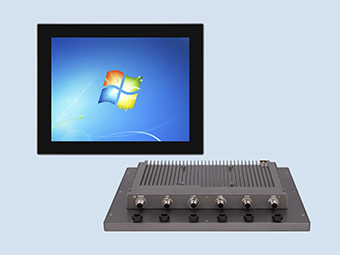
Industrial panel PCs enhance their durability through the use of high-strength enclosures (such as aluminum alloy), high ingress protection ratings (IP65/IP67 for water and dust resistance), and fanless cooling designs. Furthermore, they utilize industrial-grade components to ensure consistent stability even under the rigorous demands of dusty environments, vibration, humidity, extreme temperatures, and continuous operation. Regular maintenance—such as cleaning ports and updating firmware—can further extend their service life.
Durability is taken into account right from the initial design stage; the primary principle of industrial equipment design is to "anticipate the harshest operating conditions." This means that, during the drafting phase, every decision revolves around extreme environments.
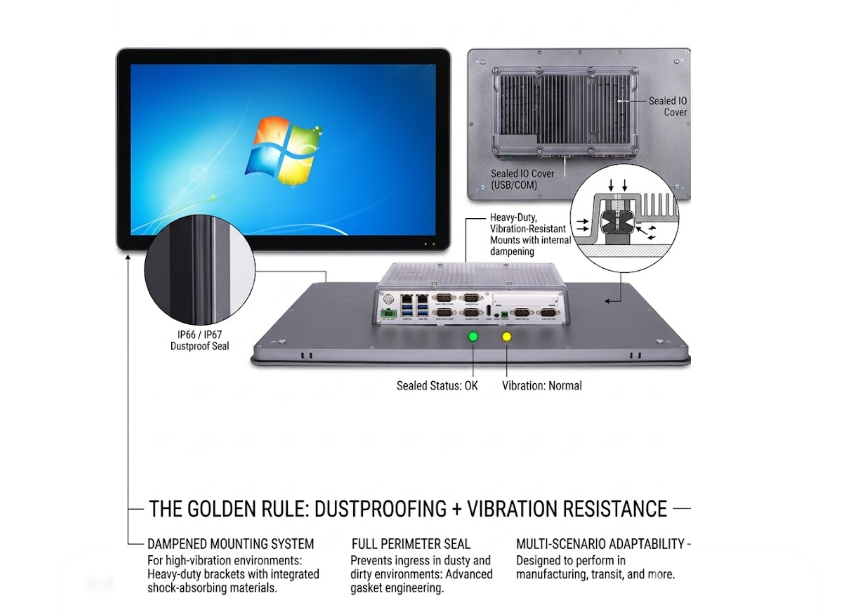
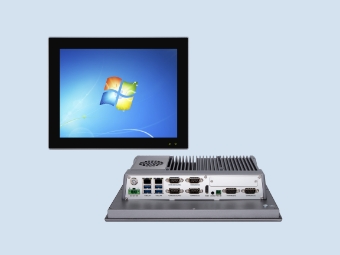
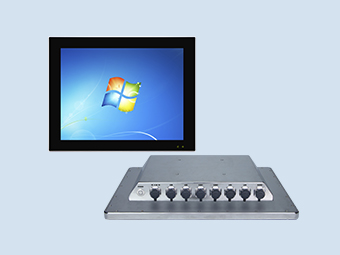
Fully Enclosed Structural Design: Featuring an integrated die-cast magnesium-aluminum alloy or high-strength industrial die-cast chassis, the design eliminates unnecessary seams and gaps, thereby establishing a primary physical barrier against dust and water ingress. All ports are equipped with spring-loaded protective covers or blind plugs fitted with sealing rings; having undergone tens of thousands of insertion and extraction cycles, these components ensure effective sealing performance even after prolonged use.
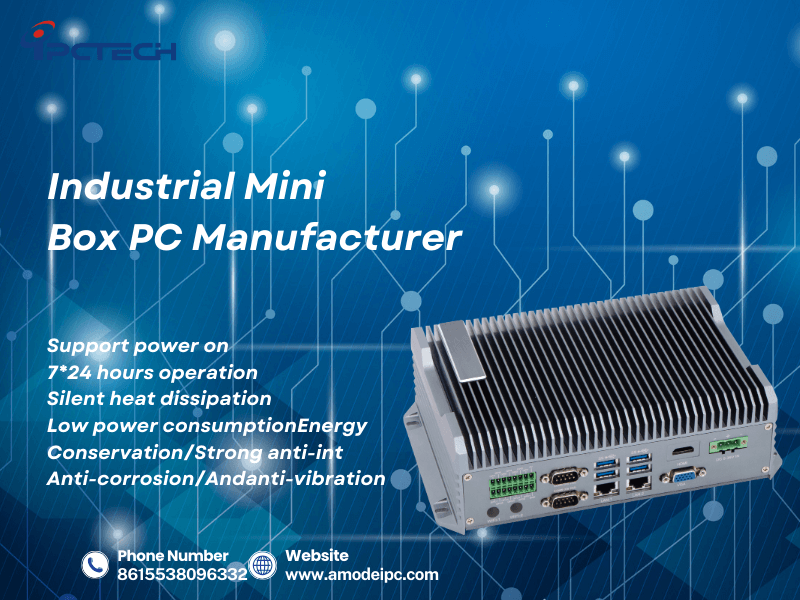
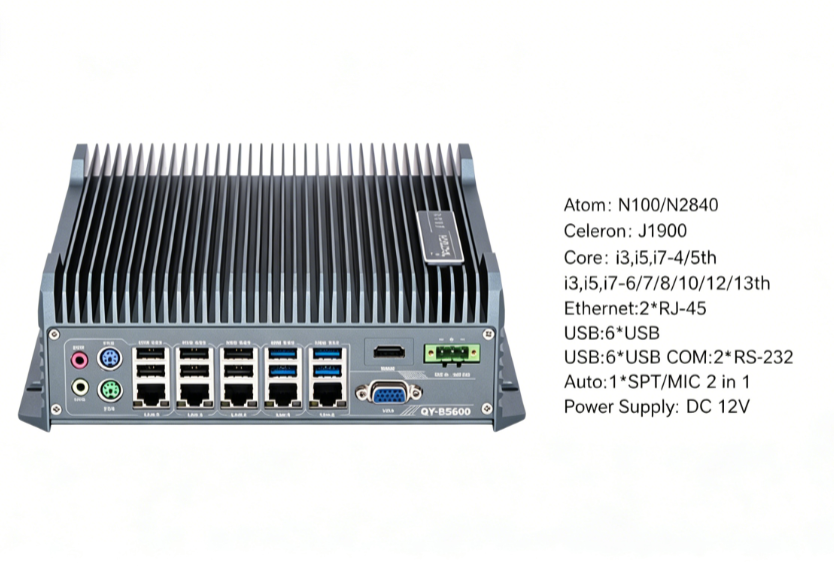
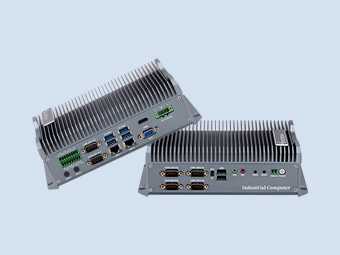
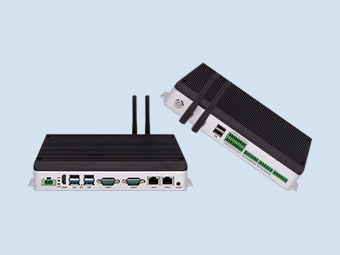
Fanless Passive Cooling Architecture: By eliminating cooling fans—which are prone to ingesting dust and suffering mechanical failure—this system employs a design featuring large-surface-area aluminum alloy heat fins combined with pure copper thermal conduction materials lining the interior walls of the chassis. Utilizing meticulously calculated thermal simulation models, heat generated by components such as the CPU is uniformly dissipated across the entire outer casing. This design not only ensures zero noise and zero maintenance but also completely eliminates the risk of system crashes caused by overheating due to fan failure or blocked air ducts, making it particularly well-suited for dust-laden workshop environments.
Wide-Temperature and Wide-Voltage Design: Featuring carefully selected industrial-grade components (such as chips, capacitors, and LCD screens), the device supports a wide operating temperature range of -20°C to 60°C—or even -40°C to 70°C—ensuring instant startup and stable operation whether in cold storage facilities or high-temperature workshops. Additionally, the power circuitry supports a wide 9–36V DC input range, capable of withstanding voltage surges caused by vehicle ignition/shutdown cycles and power fluctuations, thereby preventing accidental restarts.
Secondly, humidity is another factor in industrial environments that cannot be overlooked. High-humidity environments can lead to issues such as moisture damage and mold growth in electronic devices, thereby compromising their performance and lifespan. Consequently, industrial panel PCs must feature a water- and dust-proof design to prevent moisture and dust from penetrating the device's interior, thereby safeguarding its internal components from damage. Furthermore, the casing materials of industrial panel PCs must also possess water- and dust-resistant properties to ensure that the devices can function reliably in high-humidity environments.
As a responsible supplier, Ipctech goes beyond merely meeting the basic IP65 protection standard (offering complete dust ingress protection and resistance to low-pressure water jets); we strive to achieve IP67 (protection against temporary immersion) or even higher ratings to withstand more demanding scenarios involving wash-downs, splashing, and similar conditions. Furthermore, compliance with military standards such as MIL-STD-810G/H signifies that our equipment has successfully passed 24 rigorous environmental stress tests—ranging from multi-angle drop tests from a height of 1.2 meters and sustained vibration trials to exposure to extreme temperatures (e.g., -20°C to 70°C, or even wider ranges)—thereby ensuring its ability to withstand accidental impacts during handling, transportation, and operation. This represents far more than a mere accumulation of technical specifications; it constitutes a tangible physical safeguard realized through meticulous design details, including fully sealed metal enclosures (constructed from materials such as aluminum or magnesium alloys), protective covers for sealed ports, and internal structural reinforcement via potting.
"All-Weather" Adaptability That Defies Challenges: Industrial environments are characterized by drastic temperature fluctuations. Products from leading suppliers feature a wide-temperature design, ensuring that core components operate stably across an extreme range of -30°C to 70°C; select models even support low-temperature startup at -40°C. This capability is underpinned by specialized materials—such as industrial-grade wide-temperature capacitors—and advanced thermal management designs, including fanless passive cooling systems that efficiently dissipate heat via large-surface-area aluminum fins. This approach eliminates the risk of fan failure caused by dust accumulation, thereby achieving a harmonious balance between silent operation and uncompromising reliability.
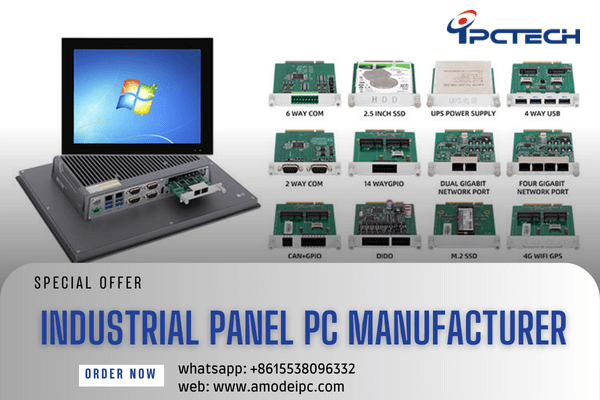
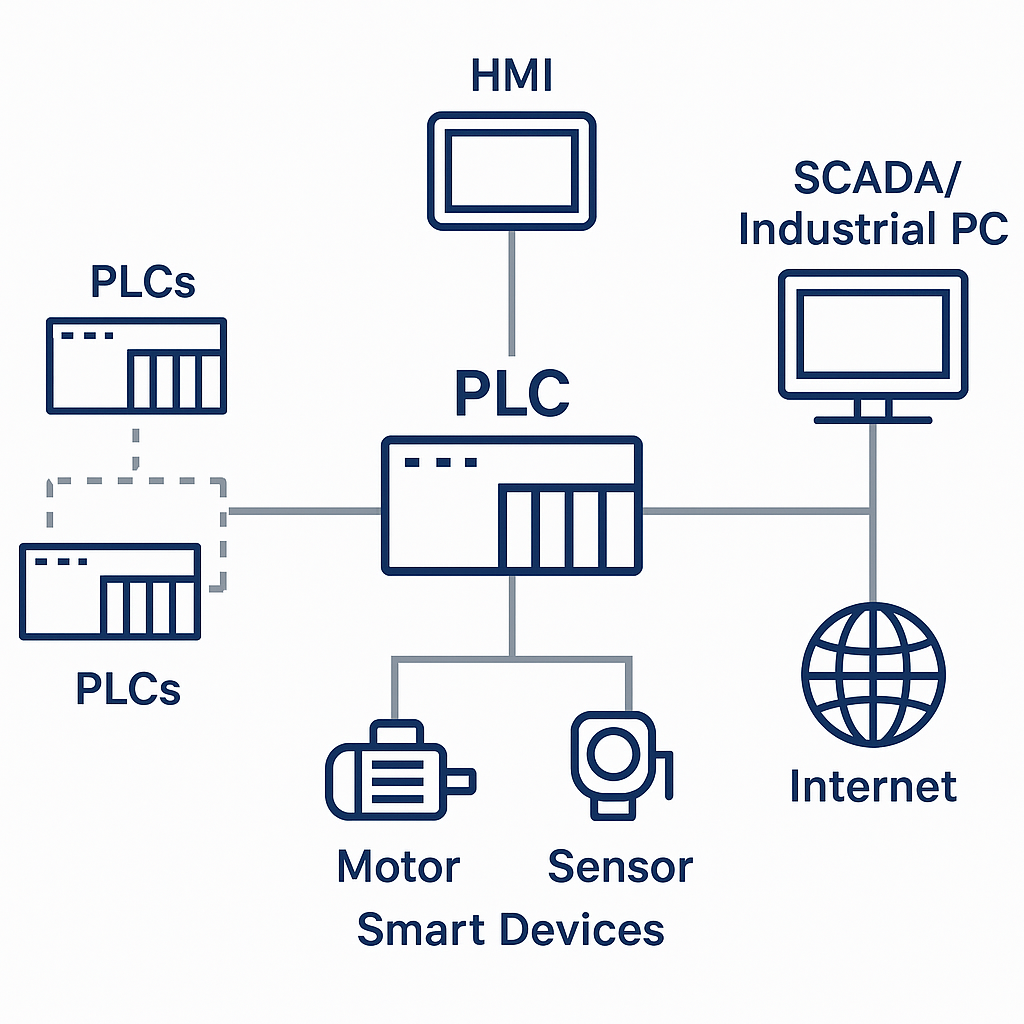
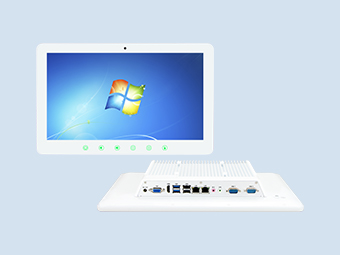
Interaction and Connectivity Tailored for Industrial Environments: Screens that are illegible under bright light—or touch interfaces that cannot be operated while wearing gloves or with wet hands—are major impediments to on-site efficiency. Leading suppliers address this by equipping their devices with high-brightness (1000 nits or higher), anti-glare displays, as well as projected capacitive or 5-wire resistive touchscreens that support glove and wet-hand operation. More importantly, they provide a comprehensive array of industrial interfaces—far exceeding those found in consumer-grade products—such as multiple RS-232/485 serial ports, CAN bus, GPIO, and Gigabit Ethernet ports. Furthermore, they offer customizable expansion modules (e.g., 4G/5G connectivity, RFID, 1D/2D barcode scanning) to facilitate seamless integration with industrial equipment such as PLCs, sensors, and robots.
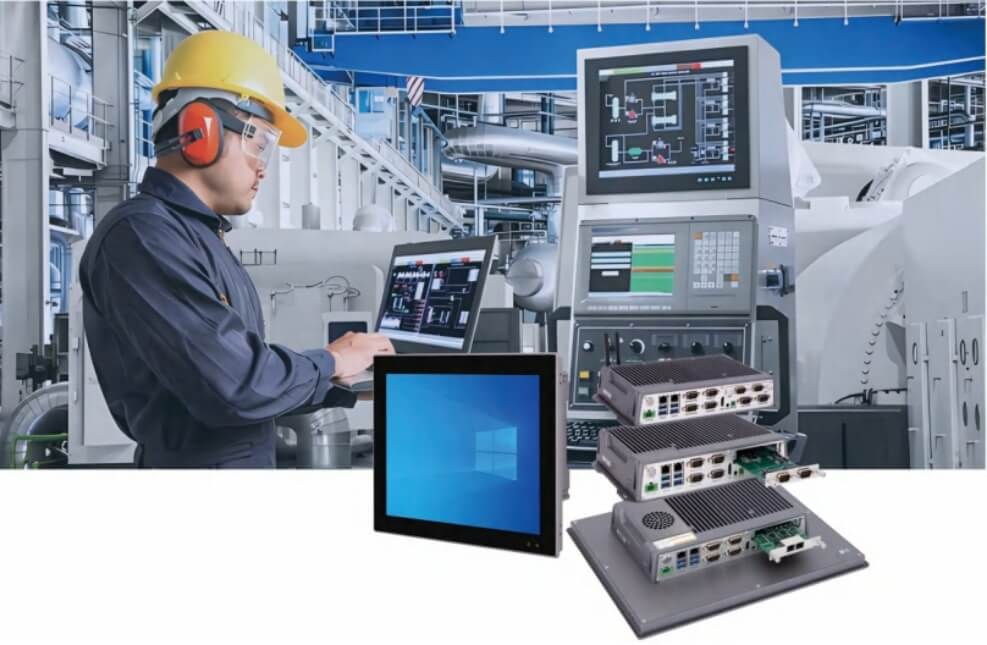
Ipctech industrial panel PCs feature enhanced protective designs against four critical environmental factors—temperature, humidity, vibration, and dust—making them more durable and stable in real-world industrial applications.
Durability is taken into account right from the initial design stage; the primary principle of industrial equipment design is to "anticipate the harshest operating conditions." This means that, during the drafting phase, every decision revolves around extreme environments.
Fully Enclosed Structural Design: Featuring an integrated die-cast magnesium-aluminum alloy or high-strength industrial die-cast chassis, the design eliminates unnecessary seams and gaps, thereby establishing a primary physical barrier against dust and water ingress. All ports are equipped with spring-loaded protective covers or blind plugs fitted with sealing rings; having undergone tens of thousands of insertion and extraction cycles, these components ensure effective sealing performance even after prolonged use.
Fanless Passive Cooling Architecture: By eliminating cooling fans—which are prone to ingesting dust and suffering mechanical failure—this system employs a design featuring large-surface-area aluminum alloy heat fins combined with pure copper thermal conduction materials lining the interior walls of the chassis. Utilizing meticulously calculated thermal simulation models, heat generated by components such as the CPU is uniformly dissipated across the entire outer casing. This design not only ensures zero noise and zero maintenance but also completely eliminates the risk of system crashes caused by overheating due to fan failure or blocked air ducts, making it particularly well-suited for dust-laden workshop environments.
Wide-Temperature and Wide-Voltage Design: Featuring carefully selected industrial-grade components (such as chips, capacitors, and LCD screens), the device supports a wide operating temperature range of -20°C to 60°C—or even -40°C to 70°C—ensuring instant startup and stable operation whether in cold storage facilities or high-temperature workshops. Additionally, the power circuitry supports a wide 9–36V DC input range, capable of withstanding voltage surges caused by vehicle ignition/shutdown cycles and power fluctuations, thereby preventing accidental restarts.
Secondly, humidity is another factor in industrial environments that cannot be overlooked. High-humidity environments can lead to issues such as moisture damage and mold growth in electronic devices, thereby compromising their performance and lifespan. Consequently, industrial panel PCs must feature a water- and dust-proof design to prevent moisture and dust from penetrating the device's interior, thereby safeguarding its internal components from damage. Furthermore, the casing materials of industrial panel PCs must also possess water- and dust-resistant properties to ensure that the devices can function reliably in high-humidity environments.
As a responsible supplier, Ipctech goes beyond merely meeting the basic IP65 protection standard (offering complete dust ingress protection and resistance to low-pressure water jets); we strive to achieve IP67 (protection against temporary immersion) or even higher ratings to withstand more demanding scenarios involving wash-downs, splashing, and similar conditions. Furthermore, compliance with military standards such as MIL-STD-810G/H signifies that our equipment has successfully passed 24 rigorous environmental stress tests—ranging from multi-angle drop tests from a height of 1.2 meters and sustained vibration trials to exposure to extreme temperatures (e.g., -20°C to 70°C, or even wider ranges)—thereby ensuring its ability to withstand accidental impacts during handling, transportation, and operation. This represents far more than a mere accumulation of technical specifications; it constitutes a tangible physical safeguard realized through meticulous design details, including fully sealed metal enclosures (constructed from materials such as aluminum or magnesium alloys), protective covers for sealed ports, and internal structural reinforcement via potting.
"All-Weather" Adaptability That Defies Challenges: Industrial environments are characterized by drastic temperature fluctuations. Products from leading suppliers feature a wide-temperature design, ensuring that core components operate stably across an extreme range of -30°C to 70°C; select models even support low-temperature startup at -40°C. This capability is underpinned by specialized materials—such as industrial-grade wide-temperature capacitors—and advanced thermal management designs, including fanless passive cooling systems that efficiently dissipate heat via large-surface-area aluminum fins. This approach eliminates the risk of fan failure caused by dust accumulation, thereby achieving a harmonious balance between silent operation and uncompromising reliability.
Interaction and Connectivity Tailored for Industrial Environments: Screens that are illegible under bright light—or touch interfaces that cannot be operated while wearing gloves or with wet hands—are major impediments to on-site efficiency. Leading suppliers address this by equipping their devices with high-brightness (1000 nits or higher), anti-glare displays, as well as projected capacitive or 5-wire resistive touchscreens that support glove and wet-hand operation. More importantly, they provide a comprehensive array of industrial interfaces—far exceeding those found in consumer-grade products—such as multiple RS-232/485 serial ports, CAN bus, GPIO, and Gigabit Ethernet ports. Furthermore, they offer customizable expansion modules (e.g., 4G/5G connectivity, RFID, 1D/2D barcode scanning) to facilitate seamless integration with industrial equipment such as PLCs, sensors, and robots.
Ipctech industrial panel PCs feature enhanced protective designs against four critical environmental factors—temperature, humidity, vibration, and dust—making them more durable and stable in real-world industrial applications.
Recommended