


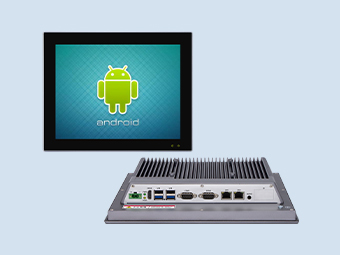
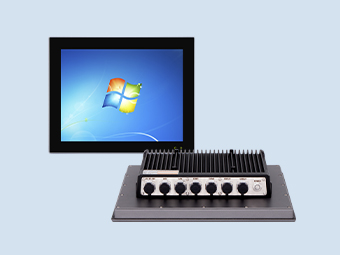
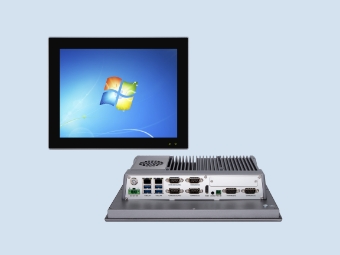
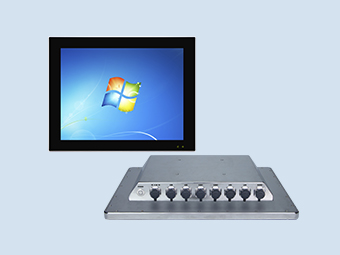
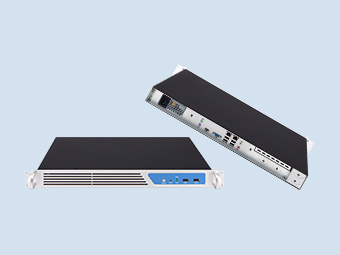
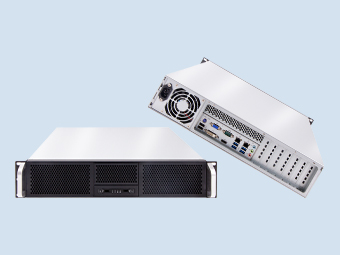
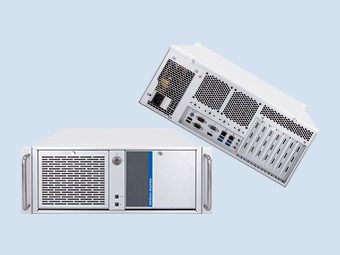
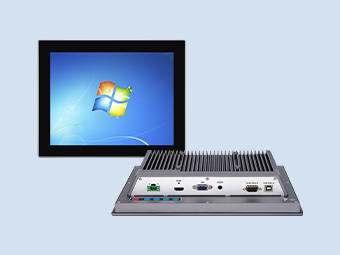
What are the differences between industrial PCs and commercial computers?
2026-02-28
The core difference between industrial PCs and regular computers lies in their design goals, environmental adaptability, and application scenarios: industrial PCs are designed specifically for industrial environments (such as high temperature, high humidity, and strong electromagnetic interference), emphasizing 24/7 stable operation and real-time control; regular computers, on the other hand, are geared towards daily office work and entertainment, focusing on versatility and cost optimization. The following is a detailed comparison:
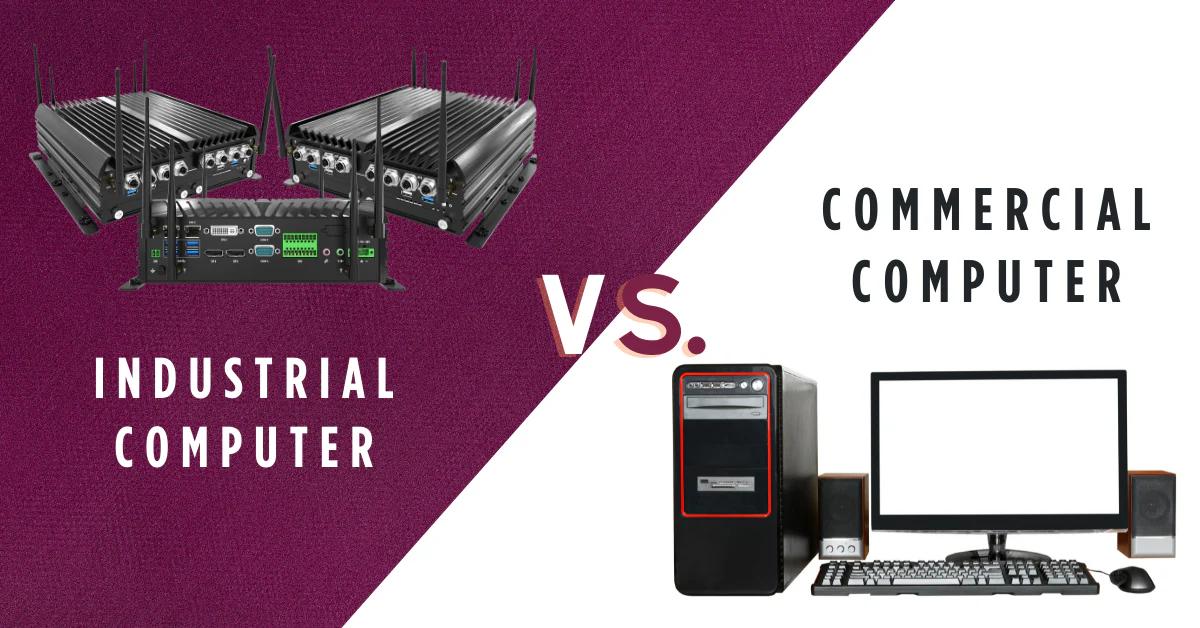
Design Goals and Core Differences
Industrial PCs: Core mission is control and connectivity. They focus on stable, real-time execution of control tasks and connection to industrial equipment in harsh environments.
Regular PCs: Designed for general scenarios (office, entertainment), they optimize graphics processing and human-computer interaction, relying on consumer-grade hardware.
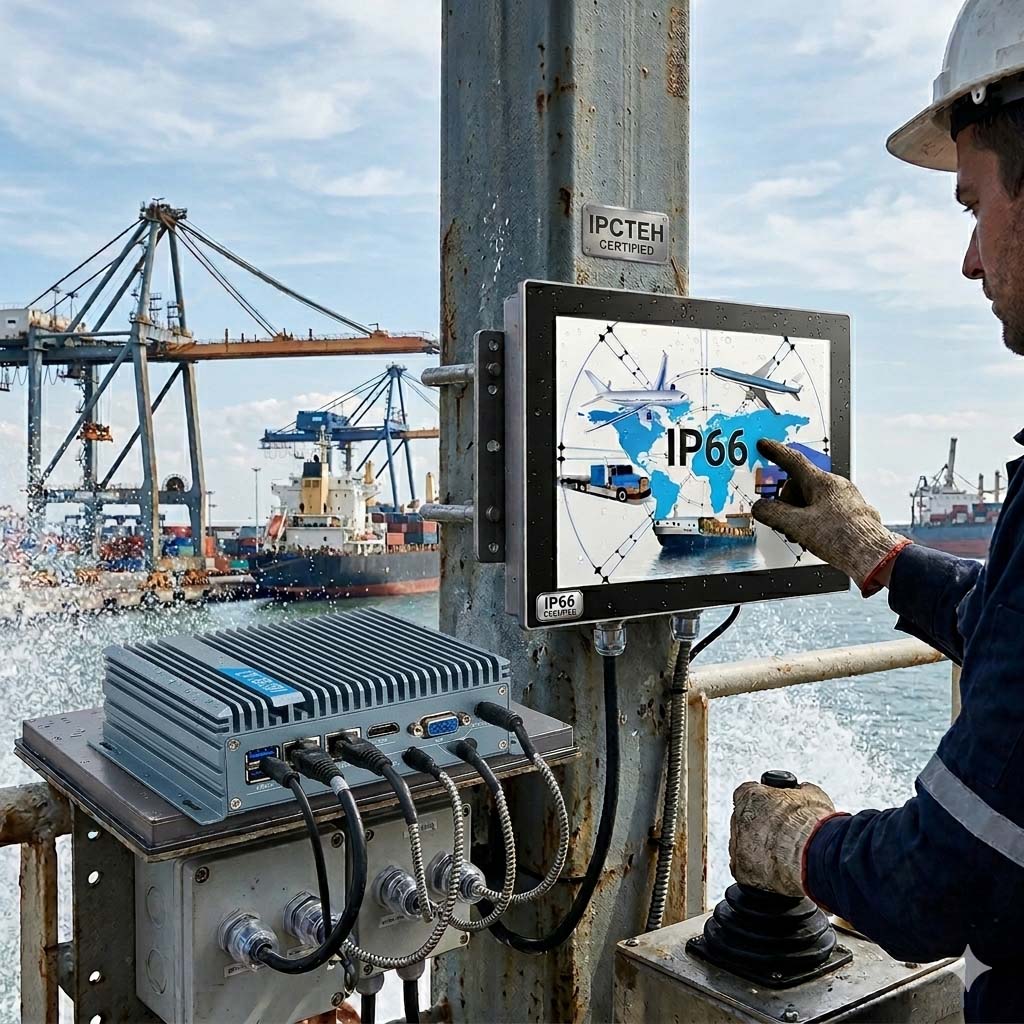
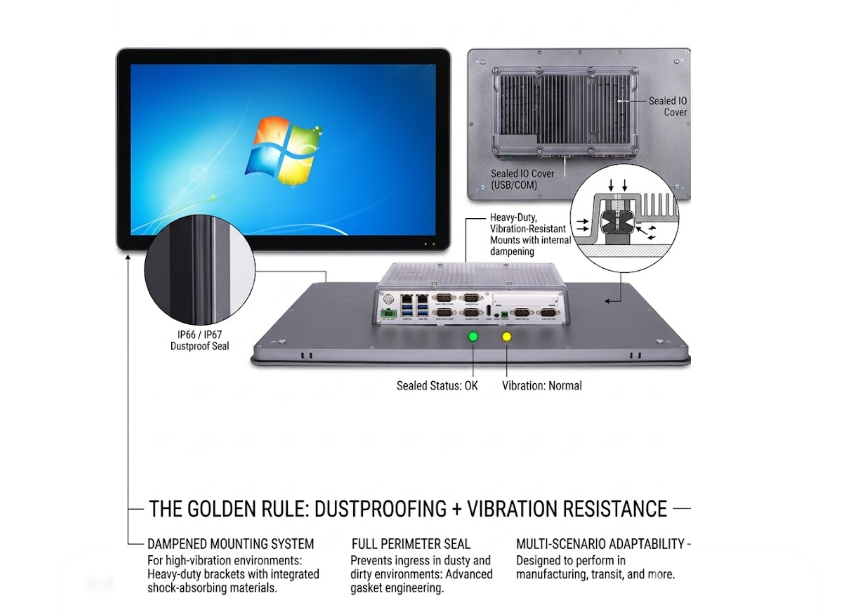
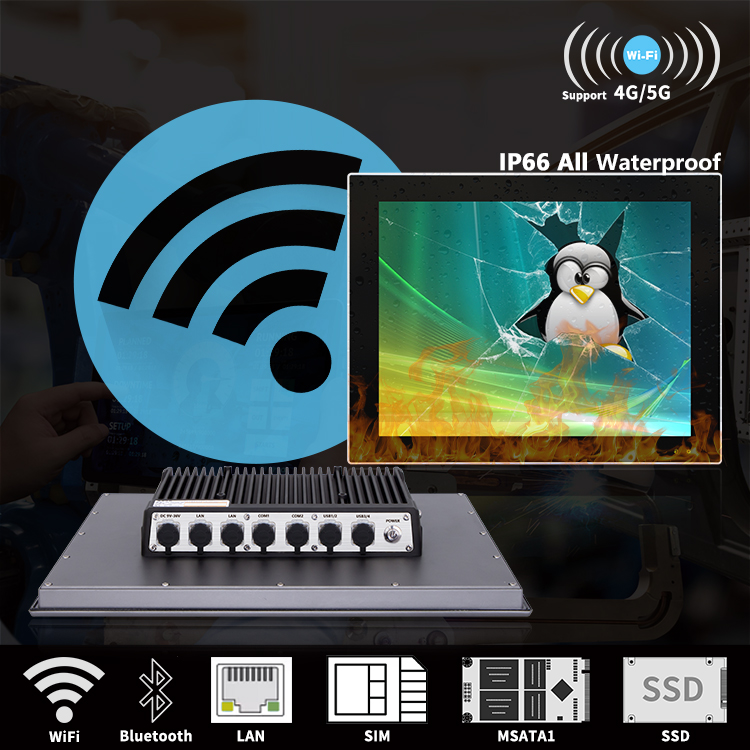
Environmental Adaptability: Industrial PC: Resistant to extreme temperatures (-40°C~85°C), dustproof and waterproof (IP65/IP67 rating). Completely prevents dust intrusion and can withstand strong water spray or short-term immersion.
Strong resistance to electromagnetic interference, featuring an all-metal casing and special filtering circuitry, enabling stable operation in industrial environments with strong electromagnetic interference. Mean time between failures (MTBF) exceeds 100,000 hours, offering extremely high reliability and supporting 24/7 uninterrupted operation.
Regular PC: Suitable for indoor use only (0°C~40°C), lacks protective design, and is susceptible to environmental influences.
Hardware Structure:
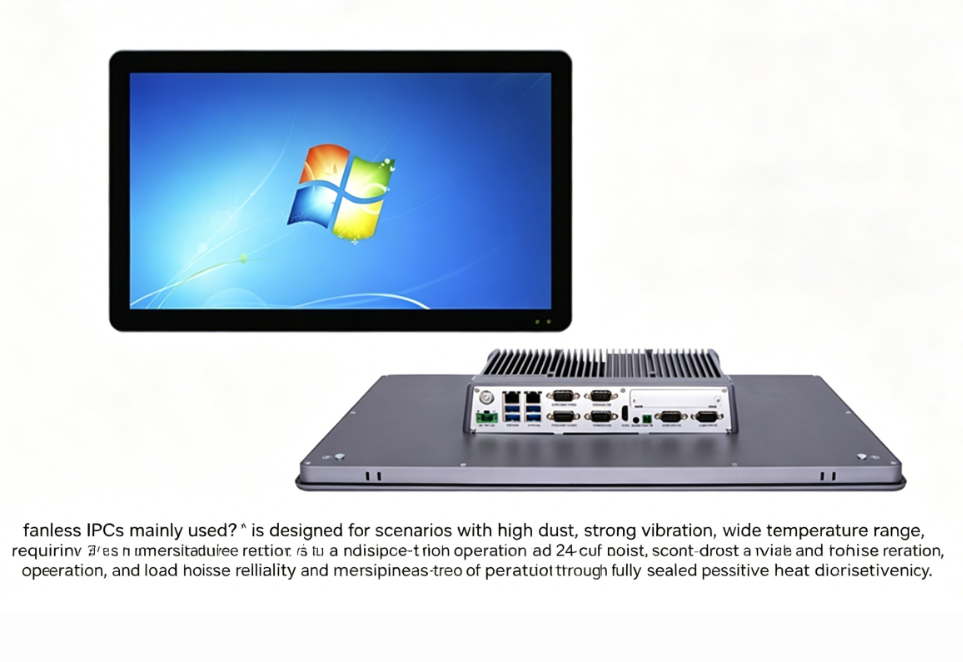
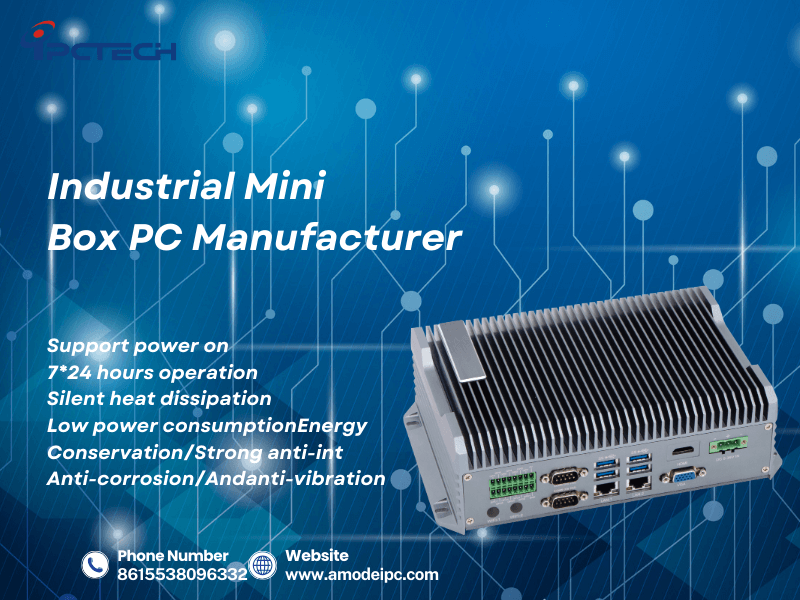
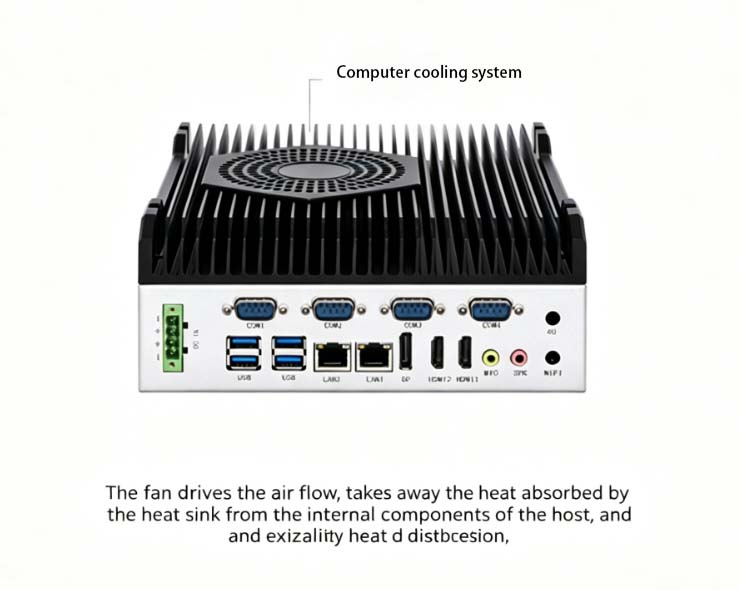
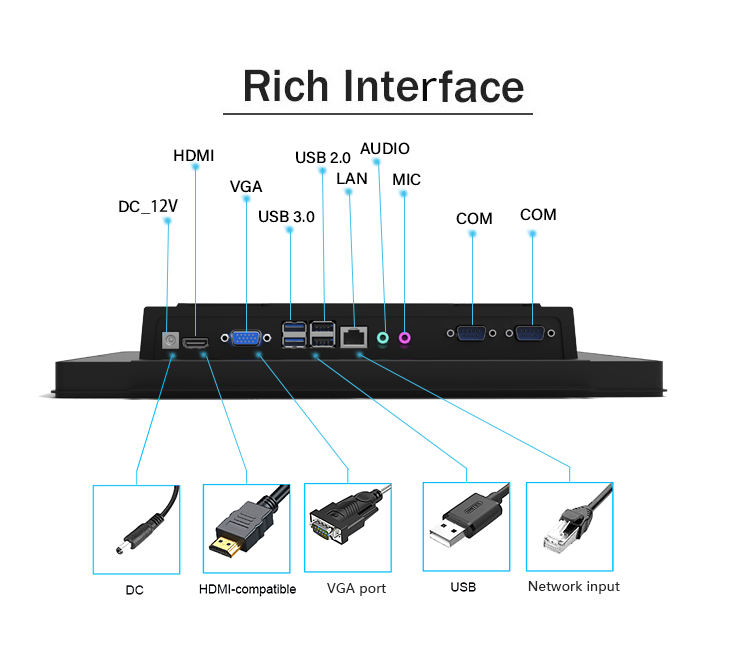
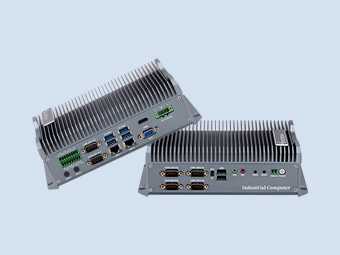
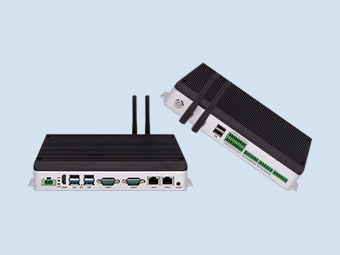
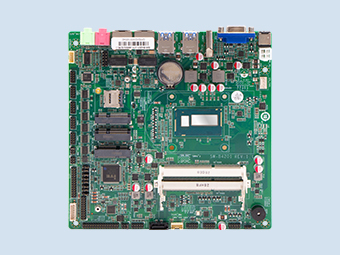
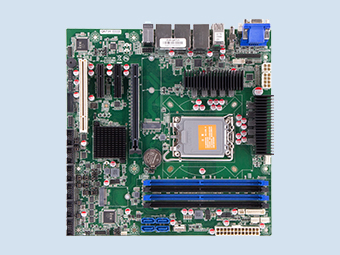
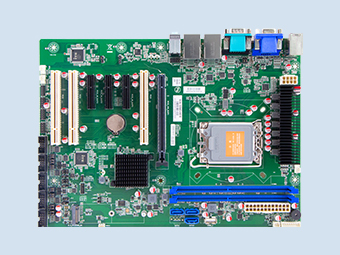
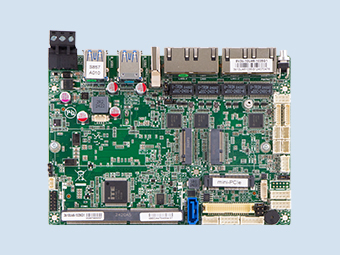
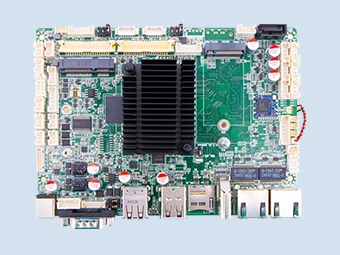
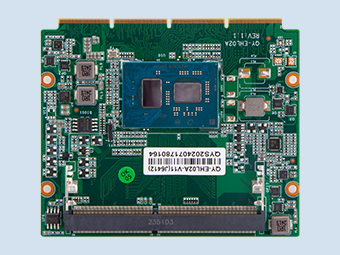
Industrial PC: Fanless cooling, industrial-grade capacitors/memory, redundant power supply, multiple interfaces (RS485/CAN/GPIO). General PC: Fan cooling, consumer-grade components, universal interfaces (USB/HDMI).Real-time Performance: Industrial PC: Supports real-time operating system (RTOS), with millisecond-level response times. General PC: Non-real-time system (e.g., Windows), with higher response latency.
Software and Maintenance:
Operating System: Industrial PC: Embedded system (Windows IoT/Linux customized version), supports industrial protocols (Modbus/Profinet). General PC: General-purpose system (Windows/macOS), no industrial protocol support.
Industrial PCs are designed for harsh, complex, and continuously stable physical environments. Their core application environments can be summarized as follows:
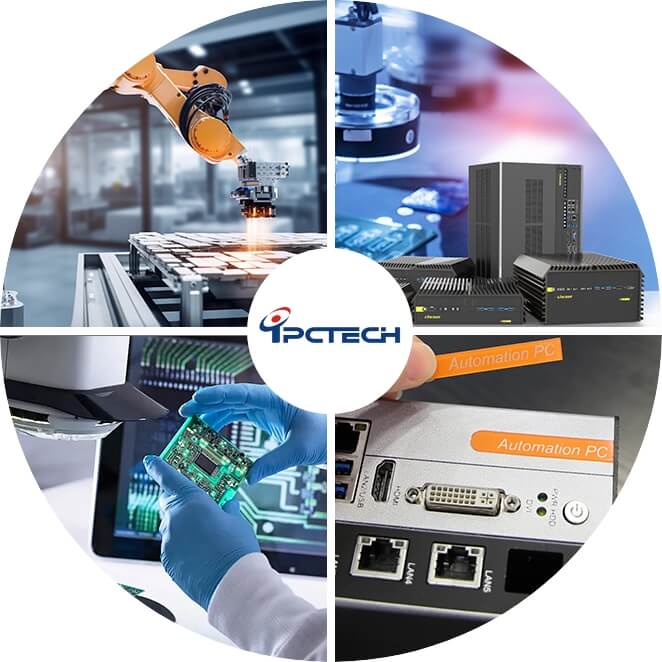
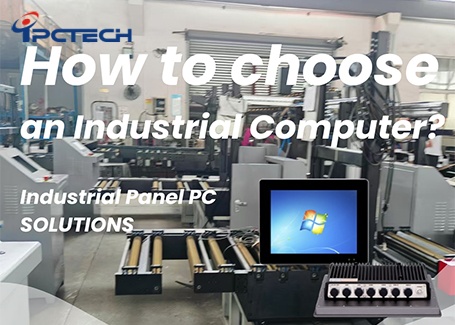
Industrial Manufacturing Sites
Environmental Challenges: Dust (e.g., from cutting and grinding), oil, humidity, vibration, electromagnetic interference (from large motors and frequency converters), temperature fluctuations.
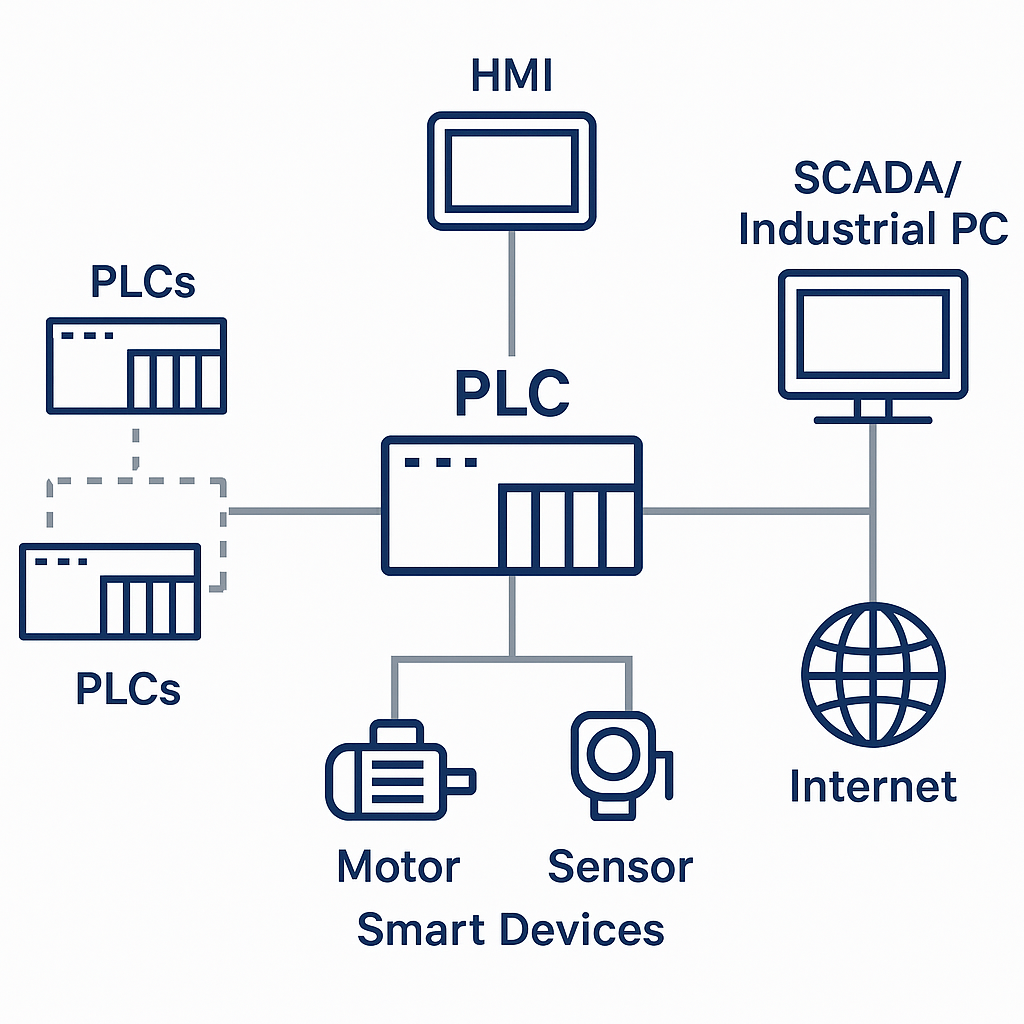
Typical Applications: Production line control, CNC machine tools, robot control, vision inspection systems. Industrial PCs connect directly to PLCs, sensors, and actuators to achieve millisecond-level real-time control.
Outdoor and Harsh Natural Environments
Environmental Challenges: Sun and rain exposure, extreme temperatures (severe cold or extreme heat), wind and sand, salt spray corrosion (coastal areas), lightning strikes and surges.
Typical Applications: Intelligent transportation (signal control, traffic violation capture), power line inspection and substation monitoring, oil and gas pipeline monitoring, outdoor advertising displays, communication base stations. Its wide temperature range and protection rating ensure all-weather operation.
Critical Infrastructure and Continuous Operation Sites
Environmental Challenges: Requires 24/7 uninterrupted operation, extremely short maintenance windows, and extremely low tolerance for failures.
Typical Applications: Data center server rooms (as network or security gateways), energy dispatch centers (SCADA systems), financial ATMs, medical imaging equipment. The high reliability and long lifespan of the industrial control computer support ensure business continuity.
Special Operating Environments
Environmental Challenges: Explosive gases (mines, chemical plants), high-intensity vibration (vehicle-mounted, ship-mounted), high altitude and low pressure.
Typical Applications: Explosion-proof industrial PCs are used in hazardous areas; ruggedized industrial PCs are used in construction machinery, rail transportation, and ship navigation systems.
The core characteristic of IPCTECH industrial PCs' application environments is that they are used in places where ordinary computers cannot operate stably, reliably, and for extended periods. Essentially, they "arm" computing and control capabilities, deploying them to the front lines of business operations.
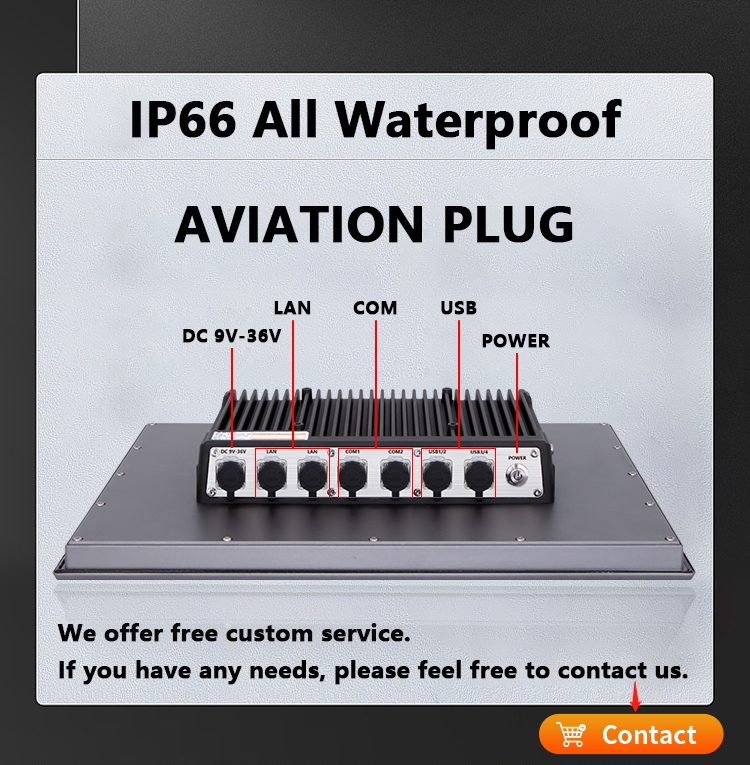
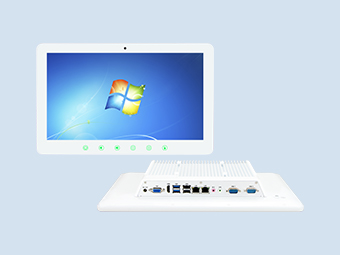
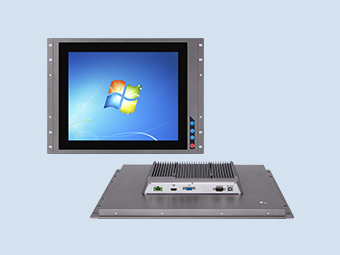
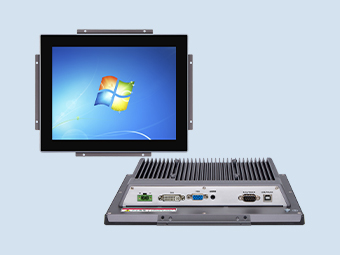
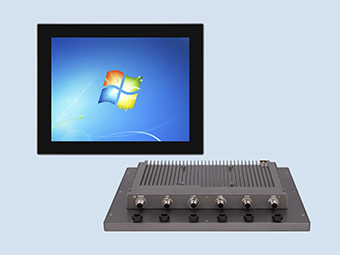
IPCTECH waterproof tablets achieve IP65 dust and water resistance. They encapsulate general-purpose computing power within a robust casing that can withstand dust, water, corrosion, vibration, and complex electromagnetic environments, making them ideal for industrial scenarios requiring data acquisition, monitoring, and interaction under harsh front-end conditions.
Recommended
.png)