



Will fanless computers frequently crash in high-temperature environments?
2026-05-09
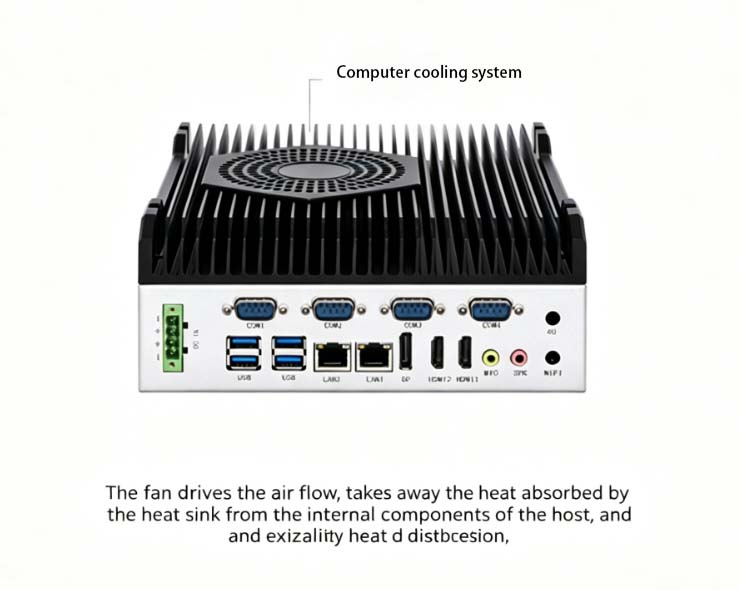
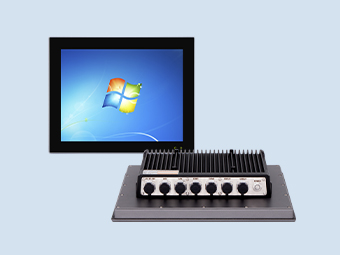
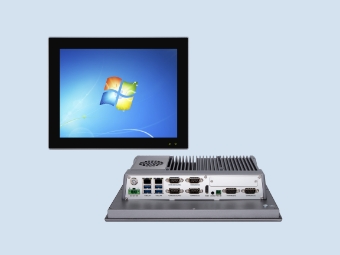
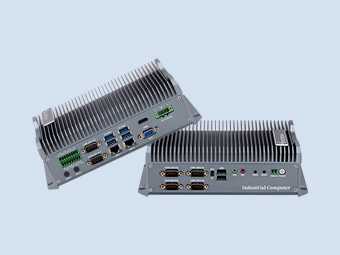
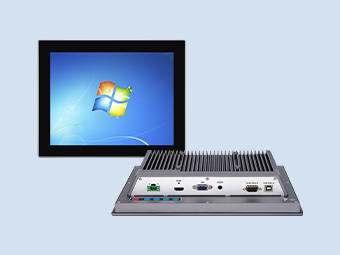
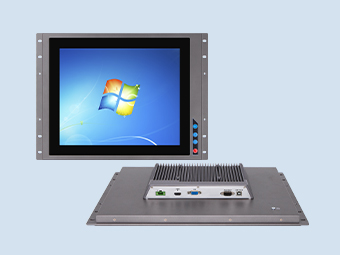
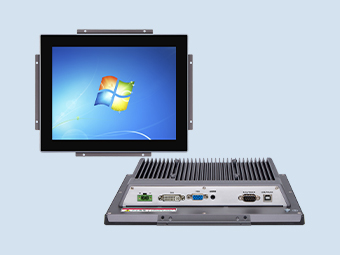
Industrial fanless computers do not frequently crash in high-temperature environments. Their cooling principle involves using a large-area heatsink fin on a casing made of highly thermally conductive materials (such as copper and aluminum). For prolonged operation in high-temperature environments, our cooling system utilizes a combination of heatsink fins and a forced-air fan for rapid heat dissipation. This combination of passive and active cooling methods ensures effective heat dissipation, allowing IPCTECH industrial computers to operate normally at temperatures between 70-80 degrees Celsius.
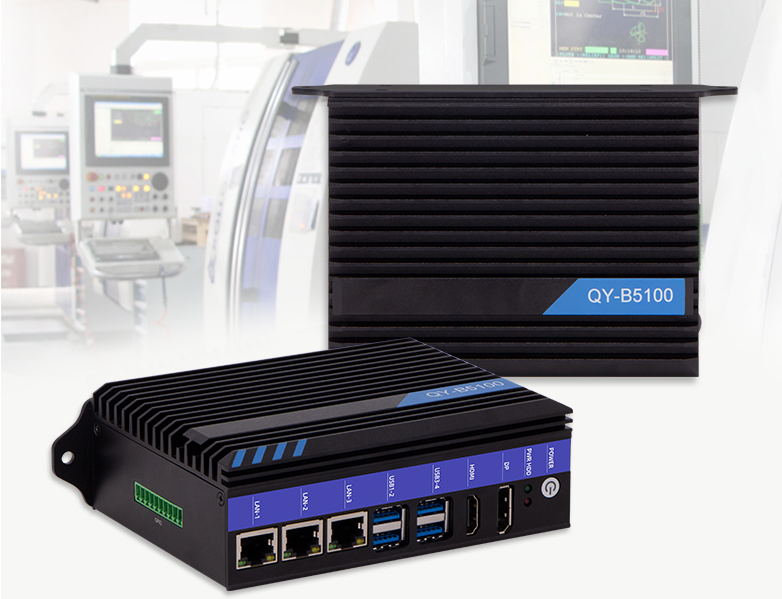
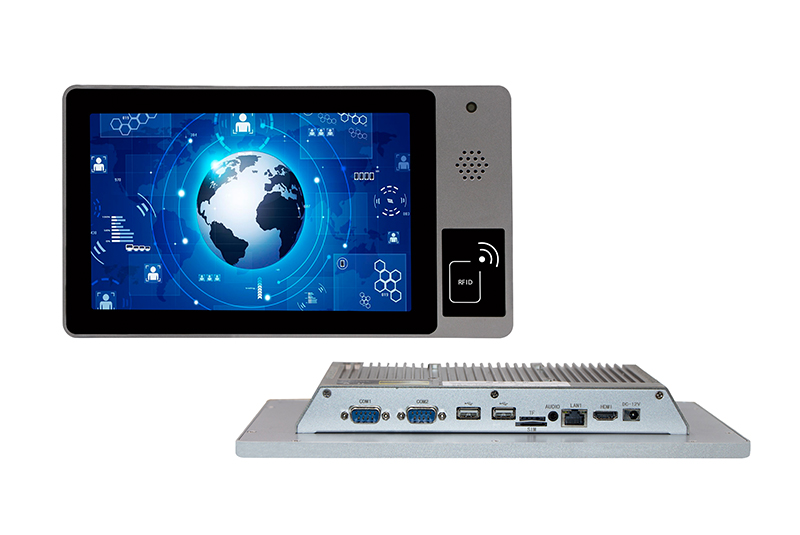
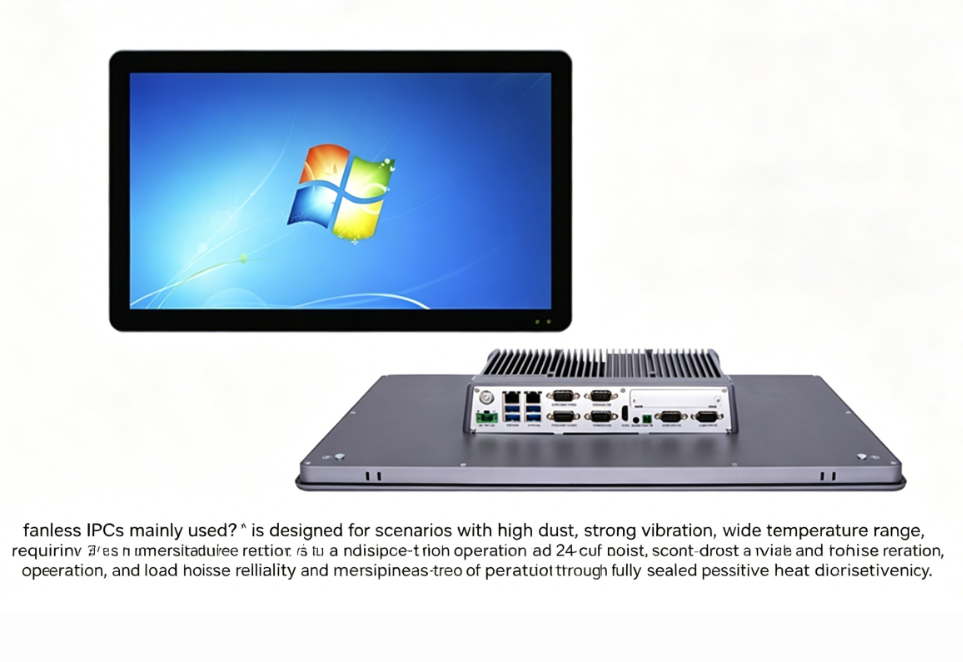
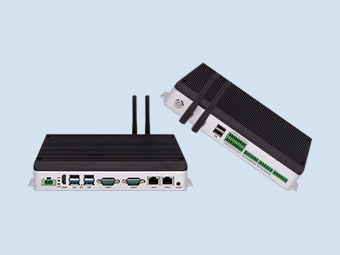
The IPCTECH industrial mini PC features a fanless design, relying on a low-power CPU for core cooling. Its heat dissipation is passive, primarily using high thermal conductivity materials (such as copper and aluminum) and large-area heatsinks, combined with natural convection or the chimney effect. The low-power CPU typically uses an ultra-low voltage architecture, with power consumption generally controlled between 10-30W, far lower than ordinary desktop CPUs, which is the core reason for its low heat generation. This type of PC is designed for light-load industrial control scenarios, such as industrial automation monitoring, equipment setup, simple data acquisition, and basic applications like point-of-sale terminals. Under normal or slightly high-temperature environments, this passive cooling design keeps the chassis temperature within a safe range without the need for forced fan airflow, preventing overheating due to self-generated heat. Its stability fully meets the long-term operational needs of low-load industrial control scenarios.
However, the passive cooling capability of fanless computers relies on ambient temperature differences. In environments with prolonged high temperatures, such as industrial workshops, outdoor server racks, and enclosed low-voltage boxes, the ambient temperature often remains above 35°C, and in some extreme cases, it can even reach 50°C. When the ambient temperature approaches or exceeds 40°C, the cooling efficiency drops significantly. In such cases, relying solely on the default passive cooling design, the heat cannot be dissipated in time. Even if the low-power CPU itself generates little heat, the accumulated ambient heat will cause the chassis temperature to continue to rise, leading to a series of problems: First, performance throttling, as the CPU will reduce its operating frequency to protect itself, causing device lag and slower response; second, system instability, as the device may trigger overheat protection when the temperature exceeds the safe threshold of 85–95°C, resulting in forced shutdowns, restarts, blue screens, etc., affecting the normal operation of industrial control equipment and, in severe cases, causing production interruptions; third, shortened hardware lifespan, as prolonged high temperatures will accelerate the aging of electronic components such as hard drives and motherboard power supply modules, reducing the overall lifespan of the device.
For industrial control applications requiring long-term high-temperature environments, customized services can optimize heat dissipation performance and mitigate operational risks associated with high temperatures. These customized services primarily focus on upgrading core elements of passive cooling. For example, replacing standard heatsink fins with larger, thicker fins increases the heat dissipation area and improves passive cooling efficiency; or using heat dissipation materials with higher thermal conductivity, such as graphene thermal pads, copper heat sinks, and vapor chambers, accelerates heat transfer from hardware to the casing, reducing heat buildup inside the chassis. Simultaneously, the chassis cooling structure can be customized based on specific usage scenarios, optimizing the airflow design and rationally increasing the layout of ventilation holes. Even without a fan, heat can be dissipated more efficiently through natural convection or the chimney effect.
Furthermore, we can customize high-temperature resistant versions of low-power CPUs to meet the load requirements of industrial control scenarios. These customized CPUs undergo special processing to adapt to higher ambient temperatures. Combined with upgraded customized heat dissipation modules, they ensure stable operation of the host in long-term high-temperature environments of 40-50℃, avoiding performance throttling, forced shutdowns, and slowing down hardware aging. Our customization service can also adjust the host size and interface layout according to the user's installation scenario, balancing heat dissipation performance and installation convenience to perfectly adapt to the special needs of high-temperature industrial environments, ensuring the continuous and stable operation of industrial control systems.
External auxiliary cooling: Phase change cooling or liquid cooling can be considered in extreme environments (but these are costly and complex).
Conclusion: Fanless computers are generally usable under normal high temperatures (<35°C) and light to moderate loads, but their heat dissipation capacity is insufficient in sustained high temperatures (>35°C) or high-load scenarios (such as gaming and rendering), easily leading to performance degradation or stability issues. For long-term stable operation in high-temperature environments, it is recommended to prioritize devices with active cooling (fan/liquid cooling), or ensure that fanless devices are deployed in a well-temperature-controlled environment. For customized products, IPCTECH can provide better customized solutions.
Recommended